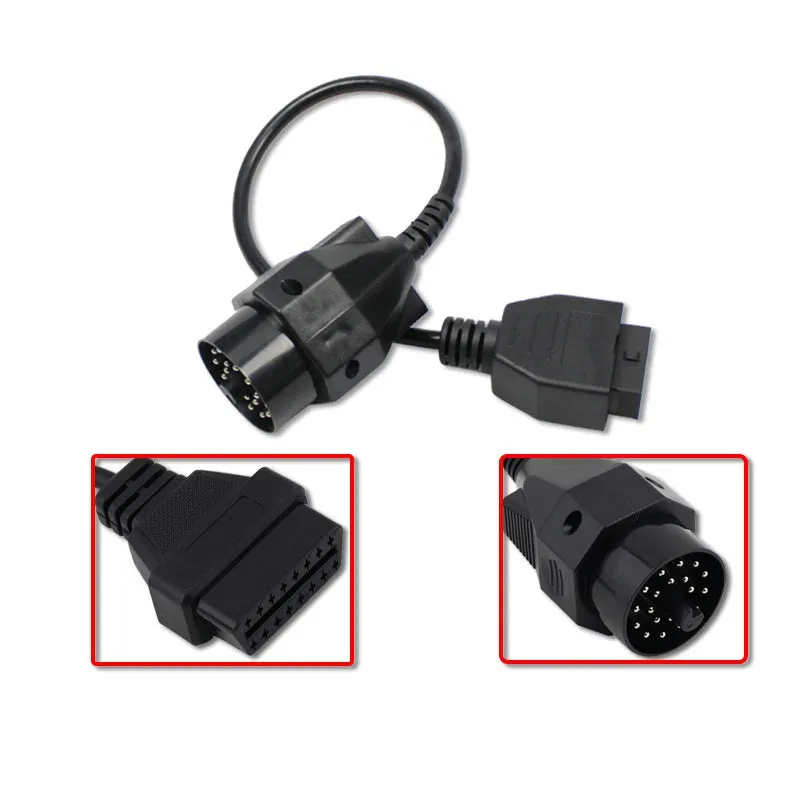
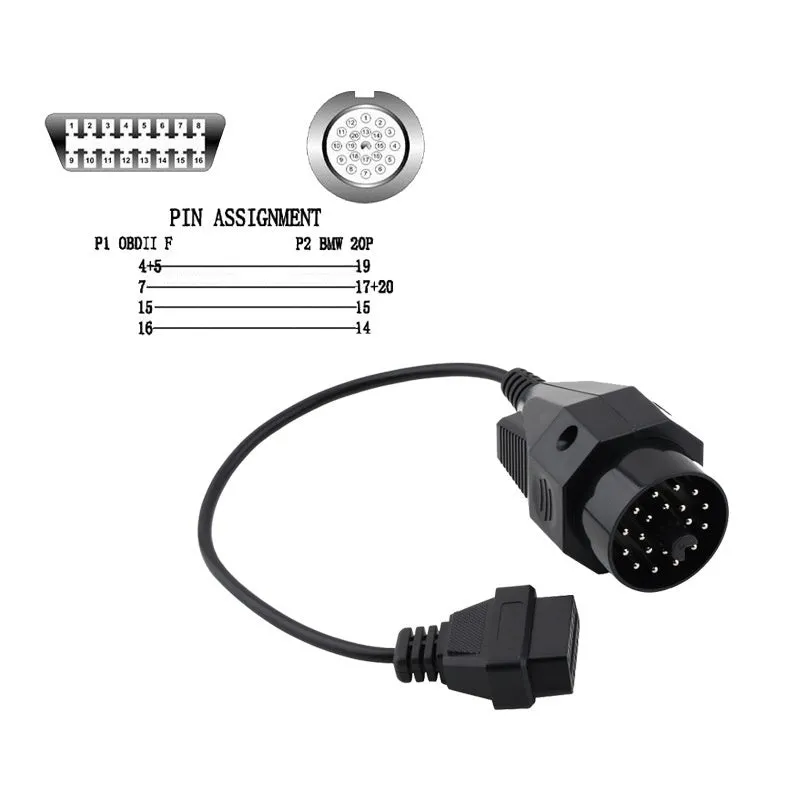
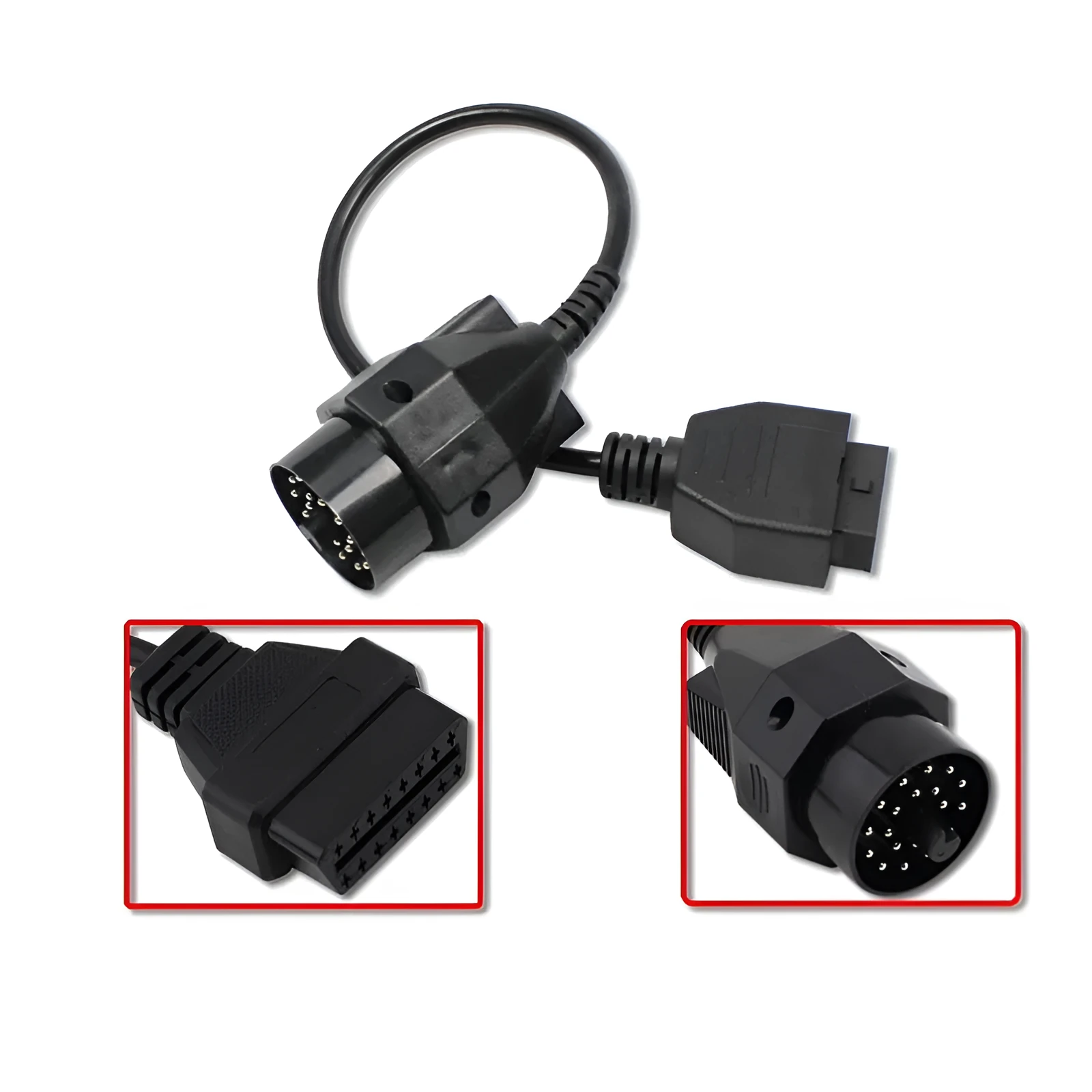
OBD2 BMW 20-pin to 16-pin connector adapter cable for BMW diagnostics and coding with 12V voltage rating and temperature tolerance up to 45°C


OBD2 BMW 20-pin to 16-pin connector adapter cable for BMW diagnostics and coding with 12V voltage rating and temperature tolerance up to 45°C
BMW OBD2 Diagnostic Adapter: 20-Pin to Standard 16-Pin Connector Cable

For BMW owners and technicians, accessing the vehicle's onboard diagnostic system requires a specific adapter due to the manufacturer's unique 20-pin socket. This dedicated cable provides the essential link, converting that proprietary port to the universal 16-pin OBD2 interface used by most code readers, scanners, and diagnostic software. It enables you to perform critical functions like reading engine fault codes, viewing live sensor data, and executing certain coding procedures that depend on a direct physical connection to the car's CAN bus network.
Features and Construction
This adapter is built to fulfil one core task: creating a reliable electrical pathway between your BMW and a standard diagnostic tool. Its design and specifications are focused on compatibility and basic electrical performance for this application.
Material and Build
The adapter consists of a connecting cable terminated with two distinct connectors. One end features a 20-pin plug designed to match the shape and pin layout of the diagnostic port found in specified BMW models. The opposite end is a standard 16-pin female OBD2 (J1962) socket. The connectors use a combination of plastic housing and metal contact pins to ensure a secure physical fit and proper electrical conductivity for data signals and power.
Size and Practical Fit
The adapter is a single cable of unspecified length, intended to provide enough slack for convenient tool use. Its key specifications centre on electrical compatibility: it is rated for the 12V electrical systems used in cars and has an operating temperature tolerance of up to 45°C, covering typical conditions within a vehicle's cabin or engine bay during diagnostic work.
Uses and Placement

This cable serves a specific technical function, bridging two different physical standards in automotive diagnostics. Its use is straightforward but vital for accessing a BMW's electronic systems.
Event or Professional Use
For professional mechanics, auto-electricians, or dedicated DIY enthusiasts, this adapter is a necessary tool for BMW-specific diagnostics. It allows standard OBD2 scan tools or more advanced diagnostic interfaces to communicate with the vehicle's Engine Control Unit (ECU) and other modules. This is essential for pinpointing issues during repairs, clearing fault codes after a fix, or performing certain model-specific coding adaptations.
Everyday Home Use
For the average BMW owner with a basic OBD2 code reader, this adapter makes that tool usable on their car. It enables simple, at-home checks when a warning light appears, helping to understand the nature of a problem before a garage visit. It provides a direct physical connection for software that may offer extended diagnostics or coding features not available via Bluetooth or wireless adapters.
Benefits and Buying Value

The value of this product lies in its specific functionality and role as a necessary interface, rather than complex features. It solves a clear access problem for a defined range of vehicles.
Reuse and Low Maintenance
As a passive adapter cable with no internal electronics, it requires no maintenance, software updates, or power source. It is a durable physical tool that can be used repeatedly across multiple diagnostic sessions on compatible BMW vehicles, providing long-term utility from a single purchase.
Why Choose This Product
This adapter is specified for BMW applications, meaning its 20-pin connector is designed to fit the corresponding vehicle port correctly. Choosing a dedicated adapter over improvised solutions ensures reliable pin-to-pin connectivity, which is crucial for accurate data transmission and preventing damage to the vehicle's diagnostic port or your expensive scan tool.