

Portable Long-Range UHF RFID Scanner Wireless Android Handheld Reader with Impinj E710 and Gen2X Support, featuring Bluetooth Connectivity and Read/Write Functions for Warehousing, Logistics and Retail Applications


Portable Long-Range UHF RFID Scanner Wireless Android Handheld Reader with Impinj E710 and Gen2X Support, featuring Bluetooth Connectivity and Read/Write Functions for Warehousing, Logistics and Retail Applications
SLP-05 Portable Android UHF RFID Reader with Impinj E710 and Gen2X Support
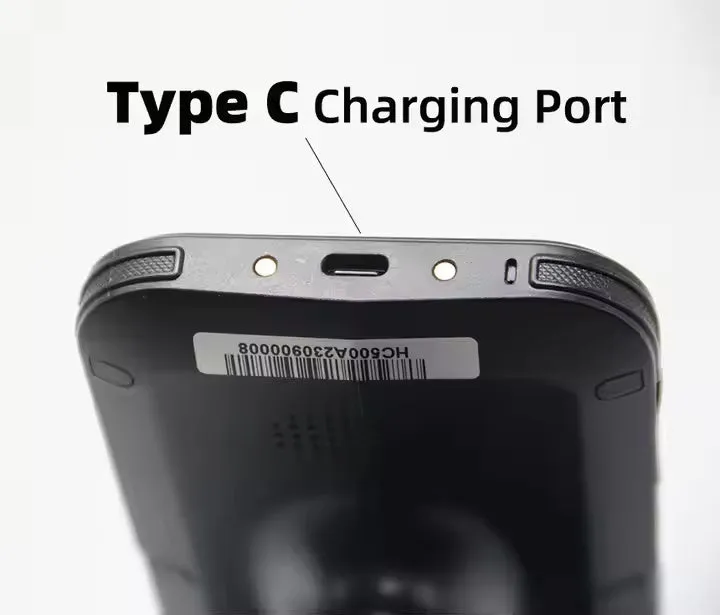
The SLP-05 represents a comprehensive handheld solution for professional RFID applications requiring both performance and reliability. Designed as an all-in-one unit, this Android-based reader combines industry-standard UHF technology with modern mobile computing capabilities. Its integration with Impinj's E710 chipset ensures compliance with established RFID protocols while delivering the read range and accuracy demanded in challenging operational environments. From warehouse inventory management to retail stocktaking and logistics tracking, the device provides a versatile tool that reduces the need for multiple specialised devices through its integrated functionality.
Technical Specifications and Performance
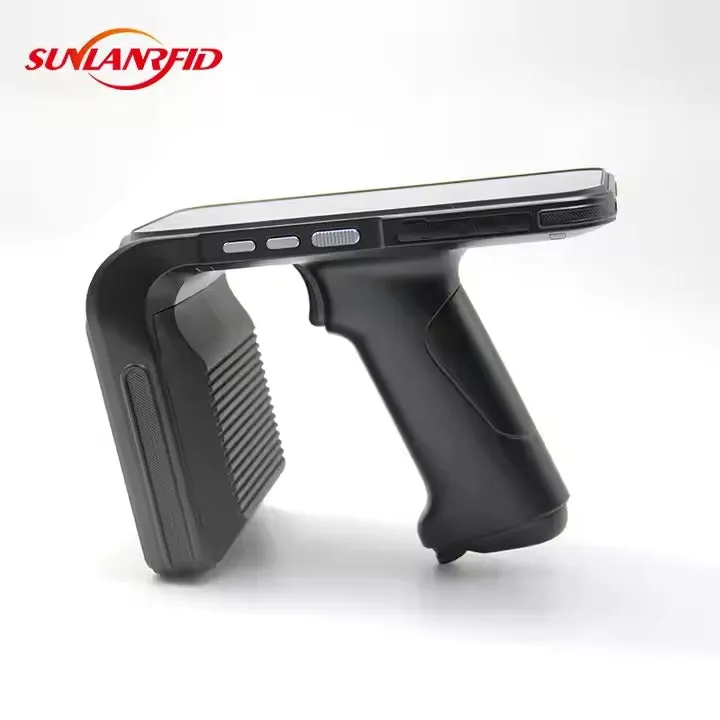
The SLP-05's technical foundation supports demanding RFID applications through several key components. Its processing platform and wireless capabilities enable efficient data capture and transfer in various industrial settings.
UHF RFID Engine and Protocol Support
At the core of the SLP-05's RFID capability is its integration with the Impinj E710 reader chip, recognised within the industry for reliable UHF performance. This hardware foundation supports the Impinj Gen2X protocol suite, which enhances standard EPC Gen2 functionality with additional features for challenging RF environments. The combination provides consistent read performance across various tag types and materials, a critical requirement in mixed inventory applications. The device's integrated design approach contributes to stable UHF performance by minimising potential interference points within the reader assembly.
Android Platform and Processing Hardware
Operating on either Android 11 or Android 13, the SLP-05 benefits from a familiar user interface and application ecosystem while maintaining appropriate security standards for business use. The octa-core processor provides sufficient computational power for simultaneous RFID operations, data processing, and user interface responsiveness. Optional configurations with mass internal memory allow for extensive local data storage when continuous connectivity cannot be guaranteed, particularly valuable in large warehouse facilities or remote logistics operations where network coverage may be inconsistent.
Connectivity and Power Management
Wireless communication is facilitated through Bluetooth connectivity, enabling pairing with peripherals or data transfer to nearby systems without cable constraints. The device incorporates a large capacity removable battery, allowing for extended operational periods without requiring mains power access. This combination supports mobility throughout shifts in environments like distribution centres or retail stockrooms where power outlets may be limited. The removable nature of the battery also facilitates quick replacement to minimise downtime between charges.
Functional Capabilities and Applications

Beyond its core RFID functionality, the SLP-05 incorporates several additional features that expand its utility across different operational scenarios. These supplementary functions address common requirements in inventory and asset management workflows.
Additional Data Capture Functions
The inclusion of 2D barcode scanning capability allows the device to read both linear and matrix barcodes, covering product identification needs beyond RFID-tagged items. NFC functionality supports interaction with compatible tags and devices, potentially useful for device pairing, user authentication, or reading specific tag types. Fingerprint recognition provides a biometric security layer for device access control, helping to maintain accountability in multi-user environments or when handling sensitive inventory data. These features reduce the need to carry separate devices for different identification technologies.
Industry Application Scenarios
The SLP-05's specification supports deployment across multiple sectors with RFID requirements. In banking and financial contexts, the security features and reliable identification support asset tracking and document management. Public security applications might utilise the device for evidence tracking, property management, or personnel identification tasks. Warehousing operations benefit from the long-range UHF capability for bulk inventory checks and pallet tracking. Retail environments can employ the device for stock management, goods receipt verification, and shelf audit processes. Logistics providers find value in parcel tracking, vehicle loading verification, and cross-dock operations where rapid identification is essential.
Operational Considerations
The handheld form factor allows for single-handed operation during scanning tasks, with button placement and screen visibility designed for field use. The device's construction prioritises durability appropriate for industrial handling, though specific impact resistance ratings or ingress protection classifications are not specified in the available documentation. The Android operating system facilitates custom application development or deployment of existing inventory management software through standard development tools and distribution methods.
Implementation and Practical Value

Deploying the SLP-05 within operational workflows involves considering both its technical capabilities and practical usage patterns. The device's design addresses several common requirements in mobile data capture environments.
Deployment Flexibility
The Android platform allows organisations to either develop custom applications tailored to specific workflows or utilise compatible commercial software available through standard distribution channels. This flexibility can reduce integration effort compared to proprietary reader systems with limited software options. The Bluetooth interface supports connection to peripherals such as headsets, printers, or supplementary scanners where required by particular tasks. The device's standalone capability reduces dependency on constant wireless network connectivity for basic operation, though network access would be needed for real-time data synchronisation in some applications.
Workflow Efficiency Factors
Combining RFID, barcode scanning, and NFC in one device reduces the need for operators to switch between multiple tools during mixed identification tasks, potentially improving process efficiency. The removable battery design supports continuous operation through battery swaps rather than requiring charging breaks, particularly valuable in shift-based environments with high device utilisation. The processing capability handles data filtering and basic validation at the device level, reducing the volume of unnecessary data transmission and subsequent server processing requirements.
Practical Implementation Scenarios
In warehouse receiving operations, the device can identify pallet-level RFID tags from a distance while also scanning individual item barcodes during quality checks. Retail stocktaking teams can use the long-range UHF capability to quickly verify entire shelf sections before focusing on specific items requiring manual counting. Logistics operators might employ the device for vehicle loading verification by reading tags on parcels as they're loaded while using barcode scanning for non-RFID items in the same consignment. The fingerprint security supports multi-user environments by ensuring individual accountability for inventory adjustments or sensitive item handling.