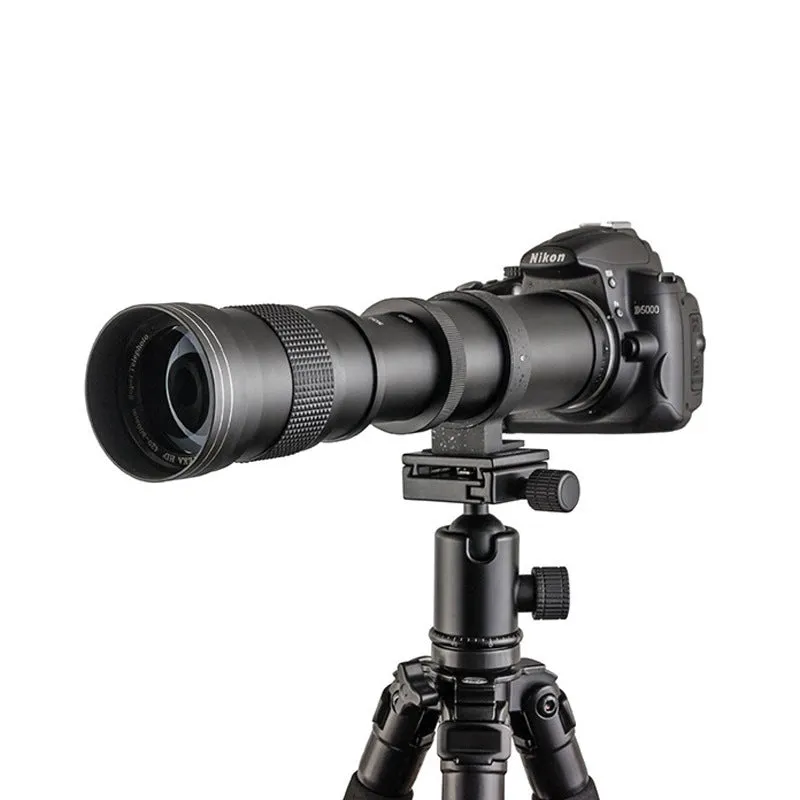
Telephoto zoom adapter ring camera lens 420-800mm f8.3-16 manual focus full frame compatible T-mount system long-range photography lens with 67mm filter thread and 24cm body length


Telephoto zoom adapter ring camera lens 420-800mm f8.3-16 manual focus full frame compatible T-mount system long-range photography lens with 67mm filter thread and 24cm body length
420-800mm Manual Telephoto Zoom Lens with T-Mount for Full-Frame Camera Systems
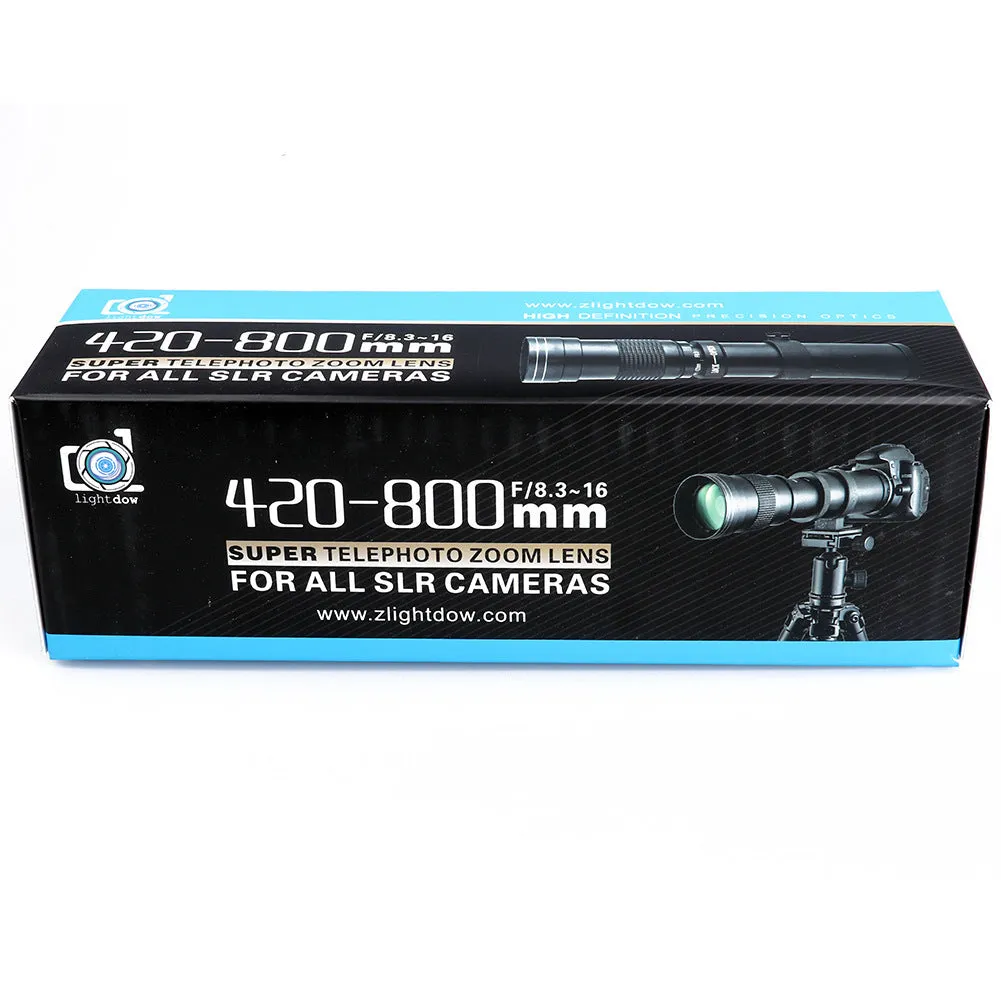
This telephoto zoom adapter lens is designed for photographers seeking an economical way to achieve significant focal length without investing in dedicated, often expensive, super-telephoto lenses. By utilising a universal T-mount system via an integrated adapter ring, it offers compatibility with a wide range of camera bodies, particularly those lacking a native lens ecosystem. Its 420-800mm focal range places distant subjects such as wildlife, sporting events, or aircraft within clear framing reach, while its purely manual operation provides a hands-on approach to focus and exposure control. The lens is specified as compatible with full-frame sensors, ensuring the image circle adequately covers the sensor area on compatible cameras, and it maintains a defined aperture range throughout its zoom for consistent exposure settings.
Optical Specifications and Performance
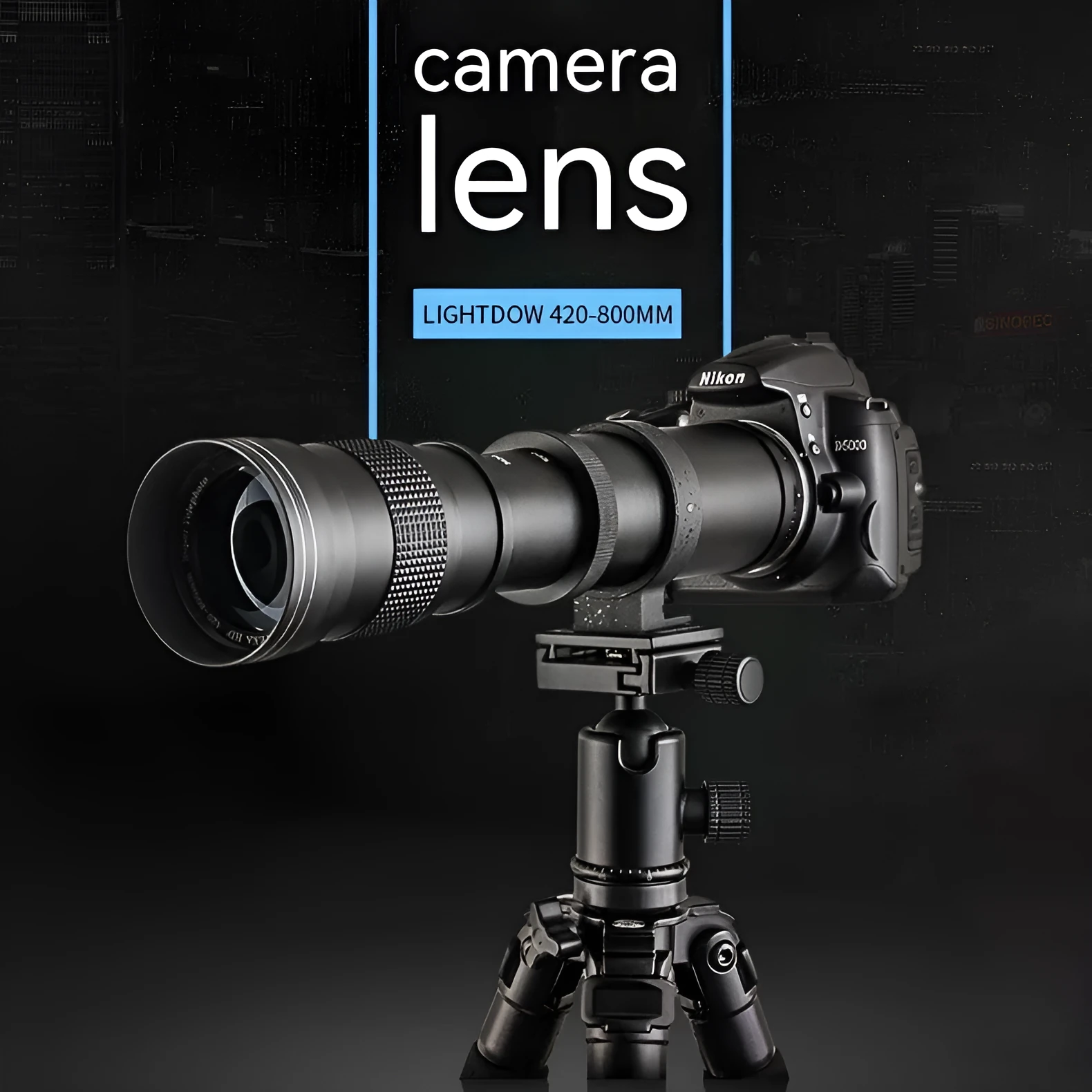
The lens core performance is defined by its optical design and manual operation parameters, which cater to specific shooting scenarios where autofocus speed is less critical than reach and cost.
Focal Length and Aperture Range
The 420-800mm focal length provides a versatile telephoto zoom range, allowing the user to adjust framing from a standard super-telephoto view at 420mm to an extreme close-up perspective at 800mm. The aperture is specified as f8.3 to f16 across this zoom range, indicating it is a variable aperture lens that becomes slower (smaller maximum aperture) as you zoom in. This is typical for adapter-style telephoto lenses and means less light reaches the sensor at the longest focal lengths, potentially requiring slower shutter speeds or higher ISO settings in lower light conditions.
Manual Focus and Minimum Distance
This is a pure manual focus lens, requiring the photographer to turn the focus ring to achieve sharpness. There is no electronic communication for autofocus with the camera body. The stated minimum focusing distance is 1.5 metres, which defines how close you can be to a subject and still achieve focus. This is a practical distance for many telephoto subjects but may limit extreme close-up work on nearby smaller objects.
Optical Construction and Stabilisation
The optical formula consists of 4 lens elements arranged in 2 groups. This relatively simple design contributes to the lens's manageability in size and weight. The product description explicitly states the lens is "without anti shake," meaning it lacks any form of built-in optical image stabilisation (OIS or VR). At such long focal lengths, camera shake is magnified, so using a sturdy tripod or employing very fast shutter speeds is recommended to avoid blurry images from hand-holding.
Physical Build and Compatibility
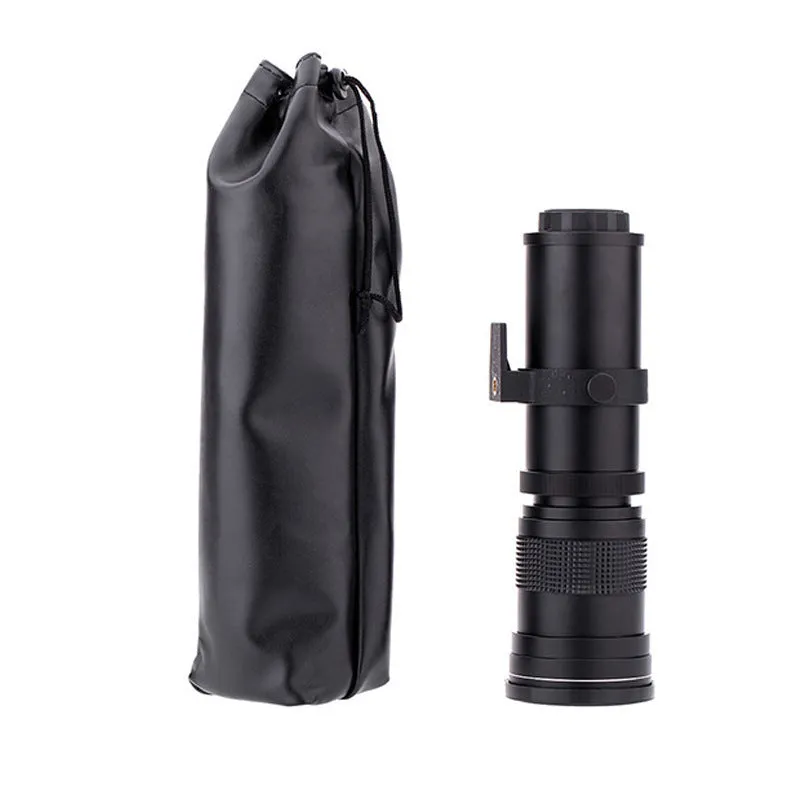
The lens's physical dimensions and mounting system are key to its utility and portability, designed for photographers who need a transportable long-lens solution.
T-Mount System and Full-Frame Support
The lens is described as "a T-port, equipped with a connector ring." The T-mount is a universal, screw-thread lens mount system. The integrated adapter ring allows this lens to be attached to various camera brands (like Canon EF, Nikon F, Sony E, etc.) via separate, widely available T-mount-to-specific-mount adapters. This makes it a flexible option for users with multiple camera systems. Its stated compatibility with "full frame" sensors means the projected image circle is designed to cover a 35mm film/sensor area without severe vignetting.
Dimensions, Weight, and Filter Thread
For a lens covering this focal range, its physical profile is relatively compact. The body measures approximately 24cm in length and 6.8cm in diameter when retracted, extending to about 36cm at its longest stretch when zoomed to 800mm. This makes it transportable in a standard camera bag. The weight is 675g, which is manageable for handheld use with support. The front of the lens features a 67mm filter thread, allowing the attachment of commonly available filters such as UV filters for protection, polarising filters to reduce reflections, or neutral density filters to control exposure.
Build and Handling Considerations
The construction centres on the extending zoom barrel, which manually telescopes to change focal length. Care should be taken to operate this mechanism smoothly and to retract it for storage. The lack of electronic contacts means all camera settings (aperture, shutter speed, ISO) must be set on the camera body itself, and the camera will likely need to be used in manual (M) or aperture-priority (A/Av) mode where you specify the aperture.
Practical Use and Application
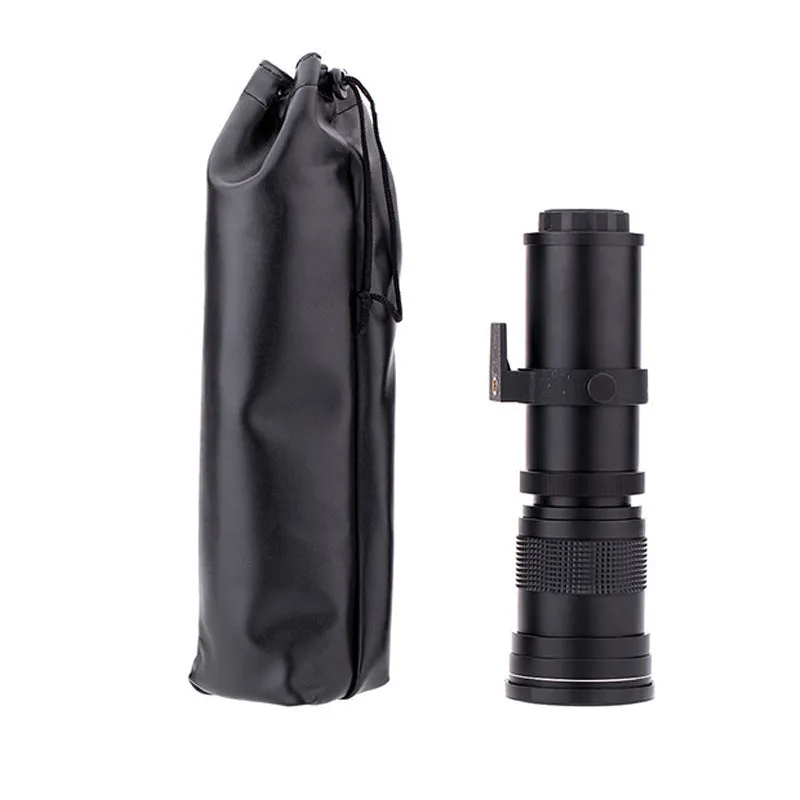
This lens serves a clear niche within photography, offering specific capabilities best suited to well-defined scenarios and user expectations.
Ideal Shooting Scenarios
The 420-800mm range is overwhelmingly suited to subjects where the photographer cannot get physically close. Primary applications include wildlife photography from a hide or safe distance, capturing action at sports events from the stands, photographing aviation at airshows, or detailed landscape elements like distant mountain peaks. The manual focus requires practice to master on fast-moving subjects but can be very effective for slower or predictably moving targets.
Limitations and Workarounds
Users should be aware of the limitations inherent in the design: the manual focus, lack of stabilisation, and variable, relatively slow aperture (f8.3-16). Successful use often depends on good light, a stable shooting platform (tripod/monopod), and patience with the manual focus process. The image quality may not match that of far more expensive, multi-element, branded telephoto lenses, but it provides access to focal lengths that would otherwise be cost-prohibitive.
Value and Entry-Level Utility
The core value proposition is accessibility to extreme telephoto perspectives. It is a practical tool for hobbyists, enthusiasts, or those on a tight budget who want to experiment with long-lens photography without a major financial commitment. It also serves as a useful backup or specialised tool for more advanced photographers who need an ultra-portable long lens for specific trips or situations where carrying their primary heavy telephoto lens is impractical.