

WIFI development board ESP-8266EX microcontroller Arduino compatible with 11 I/O pins, 1 ADC pin, OTA wireless upload, onboard 5V 1A switching power supply for IoT projects


WIFI development board ESP-8266EX microcontroller Arduino compatible with 11 I/O pins, 1 ADC pin, OTA wireless upload, onboard 5V 1A switching power supply for IoT projects
ESP-8266EX WIFI Development Board: Arduino-Compatible with OTA Upload and Onboard Power
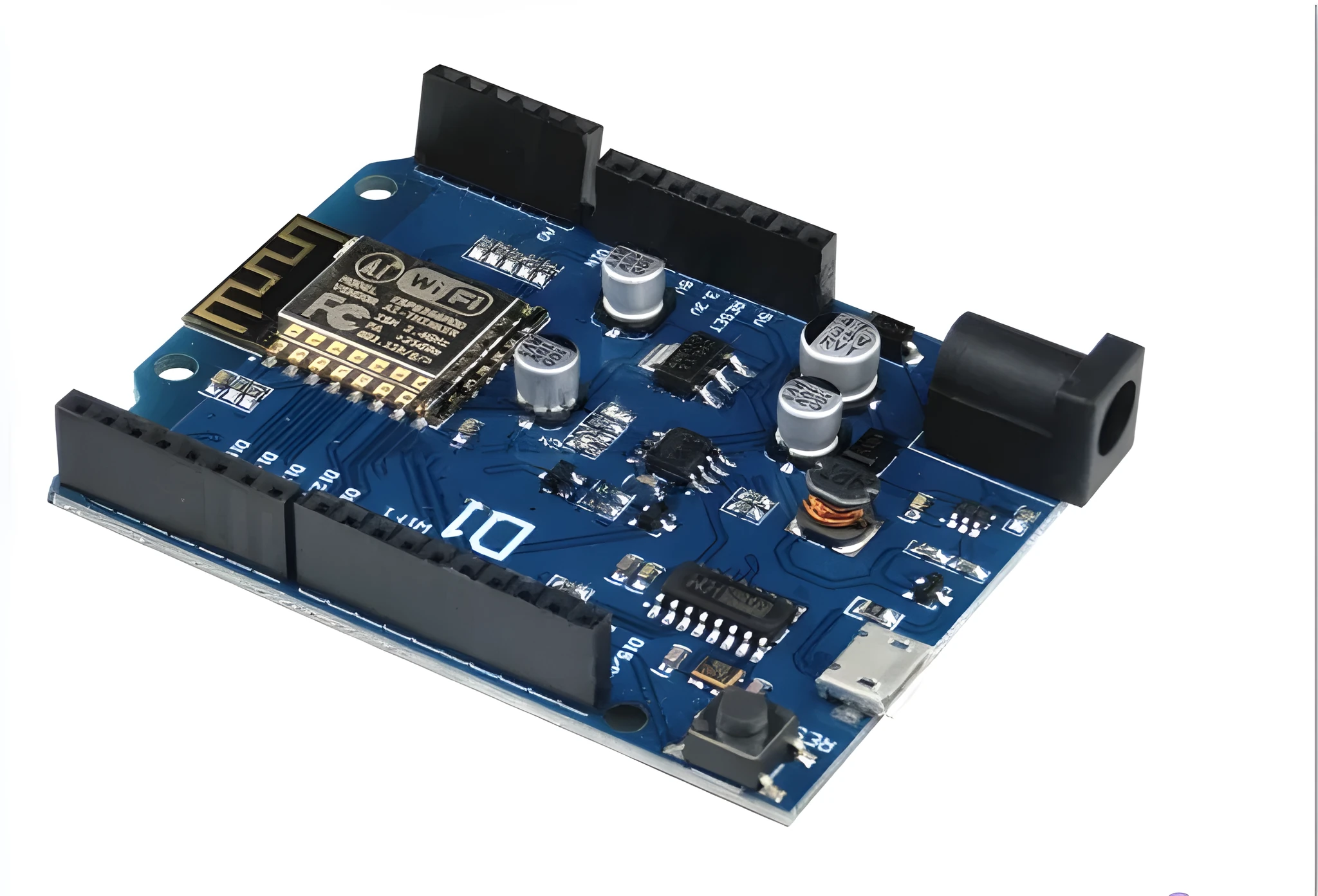
This WIFI development board offers a practical entry point into Internet of Things (IoT) projects, built around the popular ESP-8266EX microcontroller. Its primary advantage is seamless compatibility with the Arduino IDE, allowing developers familiar with the Arduino ecosystem to start programming immediately after installing the provided hardware package. The board operates with a similar workflow to an Arduino UNO, significantly reducing the learning curve for creating connected devices. A key feature is the integrated support for OTA (Over-The-Air) wireless uploads, which facilitates remote updates and maintenance of deployed projects without physical access. Furthermore, the inclusion of an onboard 5V 1A switching power supply, capable of handling input voltages up to 24V, simplifies power management and provides flexibility for various project setups.
Features and Construction

The board's functionality is defined by its specific hardware components and their configurations, centred on enabling Wi-Fi connectivity and easy programmability for a range of applications.
Material and Build
The core of the board is the ESP-8266EX microcontroller, a widely used chip known for its Wi-Fi capabilities. The electronic components are mounted on a standard PCB (Printed Circuit Board), which has a black finish. The construction is focused on providing the necessary pinouts and power regulation to support the listed features, such as the OTA functionality and the switching power supply. The build prioritises functional layout for prototyping and development work.
Size and Practical Fit
While exact physical dimensions are not provided, the board is designed as a development platform. Its size accommodates the ESP-8266EX chip, the 5V 1A switching power supply circuitry, and headers for the 11 I/O pins and 1 ADC pin. This layout makes it suitable for use on a breadboard or within a prototype enclosure, facilitating connection to sensors, actuators, and other peripherals commonly used in IoT and electronics projects.
Uses and Placement
The board's specifications make it applicable for both hobbyist experiments and more structured prototype development, bridging the gap between simple microcontrollers and network-connected devices.
Event or Professional Use
For professional prototyping or educational environments, this board serves as a reliable tool for developing proof-of-concept IoT devices. Its Arduino compatibility allows for rapid iteration, while the OTA wireless upload feature is particularly valuable for updating firmware on devices deployed in field tests, demonstration setups, or temporary installations without retrieving the hardware. The robust power supply supporting inputs up to 24V offers flexibility when integrating with existing lab equipment or variable power sources.
Everyday Home Use
For makers and hobbyists, this board is ideal for creating smart home projects like Wi-Fi-connected sensors, smart switches, or environmental monitors. The familiar Arduino programming environment lowers the technical barrier, and the 11 I/O pins provide enough interfaces for typical DIY components. The onboard power supply means users can often power their project directly from a common wall adapter or battery pack within the specified voltage range, simplifying the overall build.
Benefits and Buying Value
The value of this development board lies in its integration of key features that are often sourced separately, providing a consolidated and ready-to-use platform for Wi-Fi-enabled projects.
Reuse and Low Maintenance
The board is designed for repeated use across multiple projects. Its durable PCB construction and standard headers allow components to be connected and disconnected reliably. The OTA wireless upload capability significantly reduces maintenance effort for long-term projects, as fixes or improvements can be deployed remotely. This extends the usable life of both the board itself and any device built around it.
Why Choose This Product
This board stands out by combining the ESP-8266EX's Wi-Fi power with the user-friendliness of the Arduino ecosystem and practical features like an onboard power supply. Unlike sourcing a bare ESP module and separate components, this integrated solution saves time on initial wiring and power circuit design. The specified 11 I/O pins and dedicated ADC pin offer clear, defined capabilities for project planning, making it a straightforward choice for developers seeking a capable, all-in-one Wi-Fi development platform.